
What Is the Bio-Psycho-Social Model?
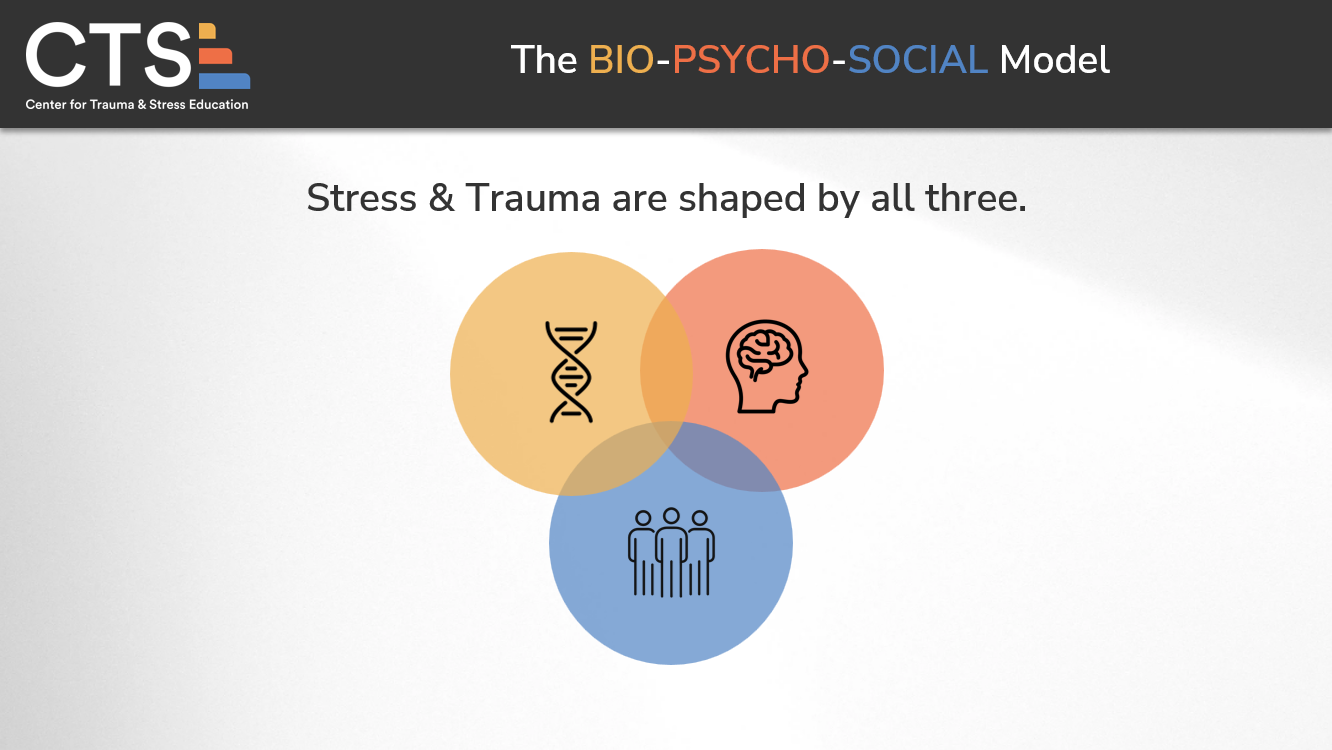
The Bio-Psycho-Social Model is a framework used in psychology and healthcare to understand how biology, psychology, and social experiences work together to shape human behavior and well-being.
Rather than looking at stress or mental health through only one lens, this model recognizes that our experiences are influenced by multiple interacting systems.
These three areas are:
Biology — how the body and nervous system function
Psychology — thoughts, emotions, and coping patterns
Social Factors — relationships, environments, and support systems
Together, these factors help explain why people respond differently to the same situation and why no single explanation fully captures human behavior.

Biology
Biological factors include the body’s systems and physical responses to stress.
Examples include:
nervous system activation
genetics and temperament
physical health and sleep
learned physiological responses
These factors influence how quickly and strongly the body reacts to stress or challenge.
Psychology
Psychological factors include the ways we think, feel, and interpret experiences.
Examples include:
emotions and emotional patterns
thought habits and beliefs
coping strategies
problem-solving skills
These influence how we make meaning of events and how we respond internally.

Social Factors
Social factors include the environments and relationships that shape our experiences.
Examples include:
family and relationships
workplace culture
community and support systems
life experiences and stressors
These influence the resources and pressures people experience in daily life.
Why This Model Matters
The Bio-Psycho-Social Model helps explain why there is rarely a single cause for stress or emotional challenges.
Instead, experiences are shaped by the interaction of body, mind, and environment.
This perspective encourages a more balanced and compassionate understanding of behavior and reduces the tendency to oversimplify complex situations.
Reflection Questions
Which part of the model do you think influences your stress most often?
How might workplace environments affect how people respond to challenges?
What changes when we consider the interaction of body, mind, and environment?
